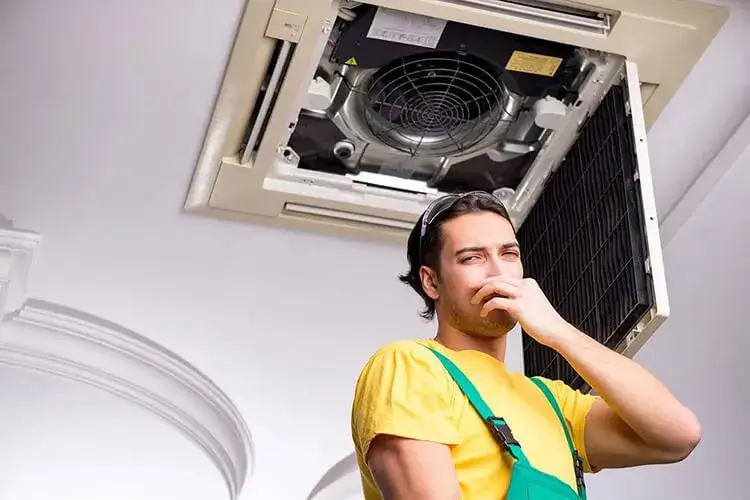
Fresh sheets. A tidy room. Maybe even a candle burning. And still, the moment your heating or cooling kicks on, a sour whiff of old gym socks drifts through the bedroom. You are not imagining it, and it is almost certainly not the laundry.
You spend close to a third of your life in your bedroom, and the EPA notes that Americans spend about 90 percent of their time indoors, so a smell like this is worth taking seriously. The source is usually hiding inside your HVAC system, and the problem even has a name.
In this blog, you’ll learn what causes the infamous “dirty sock syndrome,” why it develops inside HVAC equipment, and what you can do to eliminate the smell and keep your bedroom air fresher year-round.
Key Takeaways
- A bedroom that smells like dirty socks is usually caused by your HVAC system, not your laundry.
- The problem has a name: dirty sock syndrome, caused by mold and bacteria on the evaporator coil.
- The smell often appears when your system switches between heating and cooling in spring and fall.
- A professional coil cleaning is the most reliable way to clear the odor for good.
- Regular filter changes, humidity control, and maintenance keep the smell from returning.
Why Does Your Bedroom Smell Like Dirty Socks?

Your bedroom smells like dirty socks because mold and bacteria are growing inside your HVAC system, usually on the evaporator coil, and your vents carry that odor straight into the room. HVAC professionals call it dirty sock syndrome. The coil stays damp and dark, which gives bacteria the perfect place to multiply, and the smell releases every time air blows across it.
The reason it lands in your bedroom specifically comes down to airflow. Your supply vent pushes treated air into the room, and if the coil feeding that air is contaminated, your bedroom gets the odor first and strongest. The good news is that this is a known, fixable problem, not a mystery. Let us look at what dirty sock syndrome actually is and what feeds it.
What Is Dirty Sock Syndrome?
Dirty sock syndrome is the common name for the musty, sour smell that comes from bacteria and mold building up on your air conditioner or heat pump’s evaporator coil. The name fits because the odor really does resemble a gym bag left closed for a week. It is one of the most common air quality complaints HVAC technicians hear.
The timing is a telltale sign. The smell tends to appear when your system switches between heating and cooling, which is why so many homeowners first notice it in spring and fall.
Heat pumps are especially prone to it, because they cycle between modes year round and the coil goes through repeated warm and cool, damp and dry phases that bacteria thrive on. If your bedroom only stinks for the first few minutes after the system starts, dirty sock syndrome is the likely answer.
What Causes the Dirty Sock Smell in Your Bedroom
The smell always traces back to moisture meeting organic buildup somewhere in your system. A few specific problems create the conditions, and often more than one is at play.
A Dirty Evaporator Coil
The evaporator coil is ground zero for this odor. It pulls humidity from your air, so it stays wet, and dust and dirt that slip past the filter settle right onto that damp surface. Together they feed the bacteria and mold that produce the dirty sock smell. A coil that has not been cleaned in years is the most common cause.
A Clogged Condensate Drain or Drain Pan
All that moisture from the coil drips into a pan and drains away. When the drain line clogs or the pan holds standing water, you get a stagnant pool that grows bacteria and mold. That sitting water adds its own musty odor on top of the coil smell.
A Dirty or Overdue Air Filter
A filter packed with dust does two bad things at once. It stops trapping new debris, letting more reach the coil, and it restricts airflow in a way that keeps the coil damp longer. A neglected filter speeds up the buildup behind the smell.
Too Much Indoor Humidity
High humidity gives mold and bacteria the moisture they need to flourish. Homes that run humid, whether from climate, poor ventilation, or an oversized system that does not run long enough to dry the coil, see dirty sock syndrome more often and more strongly.
How to Get Rid of the Dirty Sock Smell
Clearing the smell means removing its source, not covering it up, and the most reliable fix is a professional coil cleaning. A technician deep cleans the evaporator coil and drain pan to strip away the bacteria and mold, which is the step that actually solves the problem. Air fresheners and candles only mask it while the colony keeps growing.
Several other moves help clear it and keep it gone:
- Change your air filter right away, then stay on a one to three month schedule.
- Have the condensate drain and pan cleared so standing water cannot grow more bacteria.
- Control your home’s humidity, since a drier coil is a less hospitable one.
- Consider a UV light installed at the coil, which kills mold and bacteria before they take hold.
- Have the ductwork checked if the odor lingers after the coil is clean, since duct buildup can hold the smell.
In stubborn cases where the coil has corroded or the buildup will not release, a technician may recommend a coil treatment or, rarely, a coil replacement. A professional assessment tells you which level of fix your system needs.
Is the Dirty Sock Smell Dangerous?

For most healthy people, the dirty sock smell is more unpleasant than hazardous, but it is not something to ignore. The odor comes from mold and bacteria, and breathing those in night after night can aggravate allergies, asthma, and general respiratory irritation. Since you sleep in that room for hours at a time, the exposure adds up.
The smell is also a signal. It tells you there is biological growth inside the system that is only going to spread if you leave it alone. Treating it early protects both your air quality and your equipment, since the same moisture problems that cause the odor can lead to clogged drains and water damage down the line.
A Real Alton Dirty Sock Syndrome Story
Last spring, a homeowner on College Avenue in Alton called B & W Heating & Cooling because their bedroom filled with a sour, sock like smell every time the heat pump switched on. They had washed every blanket in the house and still could not find the source.
Our technician recognized the pattern right away and inspected the indoor unit. The evaporator coil was coated with mold and bacterial buildup, and the drain pan held a layer of standing water from a partly clogged drain line.
We deep cleaned the coil and pan, flushed the drain, replaced the overdue filter, and recommended a coil mounted UV light to keep the growth from returning. The smell was gone within a day, and the homeowner finally slept in a room that smelled clean again.
It is a common call once the seasons start changing. The fix was straightforward, but it took reaching the actual source inside the system rather than scrubbing the room.
When to Call a Professional About the Smell
You can handle the easy first step yourself by changing the air filter and seeing if the smell fades. If it lingers, the problem is on the coil or in the drainage, and that is where a professional comes in. Cleaning an evaporator coil properly takes the right tools and cleaners, and reaching it means opening the air handler, which is not a do it yourself job for most homeowners. If the issue has progressed beyond routine cleaning or the system is no longer cooling properly, professional AC repair may be necessary.
There is also the question of what is really causing it. A technician can confirm whether you are dealing with dirty sock syndrome, a drainage problem, or something in the ducts, and fix the right thing the first time.
B & W Heating & Cooling holds a 4.8 star rating across more than 400 Google reviews from homeowners, and our team clears these odors at the source and helps keep them from coming back. Catching it early keeps a simple coil cleaning from turning into a bigger air quality problem.
Getting Your Bedroom Back to Smelling Clean
A bedroom that smells like dirty socks is your HVAC system asking for attention. The odor comes from mold and bacteria on a damp evaporator coil, it shows up most when your system switches modes, and it clears for good only when the coil and drainage are properly cleaned. Stay on top of your filter, manage your home’s humidity, and keep up with AC maintenance, and the smell has nowhere to take hold.
If candles and clean sheets are not cutting it, the fix is closer than you think. Call B & W Heating & Cooling at (618) 254-0645 or reach out online to have your system checked and the odor cleared at its source. A clean coil means a fresh bedroom and easier breathing while you sleep.
FAQ
What does dirty sock syndrome smell like?
Dirty sock syndrome produces a sour, musty odor that resembles damp gym socks or a closed locker room. It usually appears in short bursts right after your heating or cooling turns on, then fades, because the smell releases as air blows across the contaminated coil.
Why does the smell only happen when my AC or heat pump turns on?
The odor releases when air moves across the mold and bacteria living on your evaporator coil. While the system sits idle, the smell stays trapped at the coil. Once the blower starts, it carries that odor through your vents and into your bedroom.
Can I get rid of the dirty sock smell myself?
You can start by changing your air filter, which sometimes helps mild cases. The lasting fix, though, requires professionally cleaning the evaporator coil and drain pan, since reaching and treating them properly takes specialized tools and cleaners that most homeowners do not have.
Will the dirty sock smell go away on its own?
No. The smell comes from living mold and bacteria that keep growing as long as the coil stays damp and dirty. Without cleaning the source, the odor returns every time the system runs and usually gets worse over time, not better.
Does a UV light stop dirty sock syndrome?
A UV light installed at the evaporator coil helps a great deal by killing mold and bacteria before they build up. It works best as a preventive step after a thorough coil cleaning, paired with regular filter changes and good humidity control.