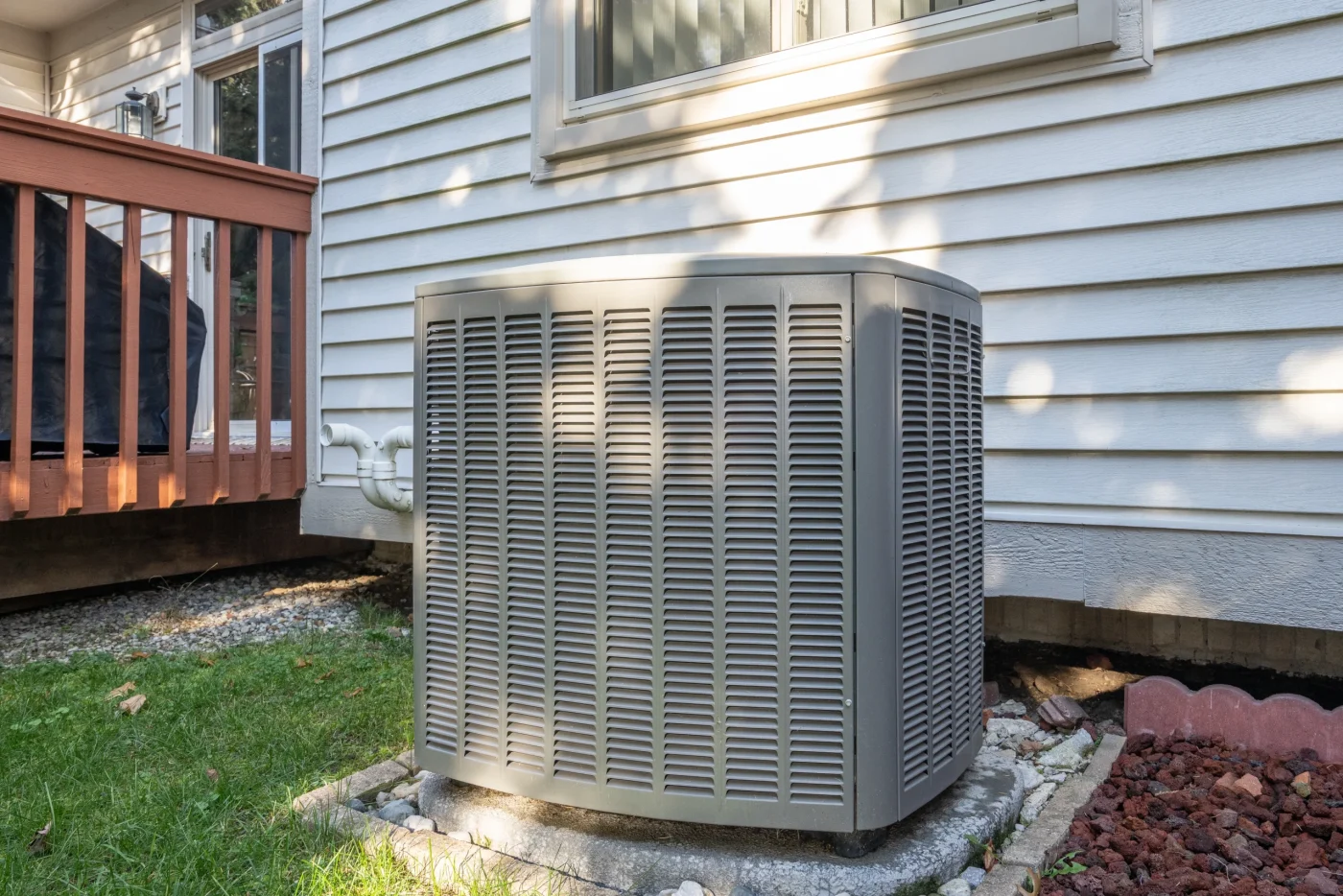
It is 95 degrees in Alton, your AC is running, but the air from the vents is barely cool. You step outside and notice the big fan on top of your outdoor unit is not spinning, or it is humming and sitting still. That fan does more than you think, and when it stops, your whole system is in trouble.
According to Carrier, the most common reasons an AC fan stops spinning are a tripped breaker, a failed capacitor, or a burned out motor. Knowing how to tell them apart can save you a sweltering afternoon and a costly compressor.
In this blog, you’ll learn why AC fan motors stop working, how to safely identify the most common causes, and when a simple fix may solve the problem versus when it is time to call a professional HVAC technician.
Key Takeaways
- The outdoor AC fan motor releases heat from your system, so when it fails the compressor can overheat.
- A humming unit with a fan that will not spin often points to a failed capacitor, not the motor.
- Always cut power at the disconnect and discharge the capacitor before touching anything inside the unit.
- Grinding or squealing noises usually mean worn motor bearings that need replacement.
- Capacitor and electrical testing is best left to a professional for safety reasons.
What the AC Fan Motor Does
The fan motor in your outdoor unit drives the fan that blows air across the condenser coil, releasing the heat your system pulls out of your home. Without that airflow, the heat has nowhere to go. The refrigerant cannot shed its heat, the compressor runs hotter and hotter, and your cooling drops off fast.
That is why a faulty fan motor is more than an inconvenience. Left running, an AC with a dead fan can overheat the compressor, which is the single most expensive part in the system. Catching the problem early and shutting the unit down protects that compressor while you figure out what is wrong.
Signs of a Faulty AC Fan Motor
A failing fan motor usually warns you before it quits completely. Here are the signs worth knowing.
The Fan Is Not Spinning
The clearest sign is an outdoor fan that sits still while the rest of the system runs. If you can hear the unit humming or the compressor running but the top fan is not turning, something in that fan circuit has failed.
Humming With No Spin
A unit that hums but does not spin is a classic symptom. More often than not this points to a failed capacitor, the part that gives the motor the jolt it needs to start, rather than the motor itself. The motor may be fine and simply unable to get going.
Strange Noises
Grinding, rattling, or squealing from the outdoor unit usually means the motor bearings are wearing out. A healthy fan runs with a smooth, quiet whir. Harsh sounds are the bearings telling you the motor is on its way out.
Warm Air and Weak Cooling
Warm air from your vents is often an early sign. When the fan is not moving enough air across the coil, the system loses its ability to cool, so your home stays warm even though the AC is running.
The Unit Overheats and Shuts Off
A fan motor that struggles can cause the whole unit to overheat and trip off on a safety switch, then restart and trip again. If your AC keeps cycling off on hot days, a failing fan motor is one likely cause.
How to Check and Diagnose a Faulty AC Fan Motor

You can safely run through a few basic checks before calling for help, as long as you respect the electricity involved. Work through these steps in order.
Step 1: Cut the Power Safely
Before you touch anything, turn off the AC at the thermostat, then shut off power at the breaker and pull the disconnect switch in the box near the outdoor unit. This is not optional. The capacitor inside stores a strong electrical charge even after the power is off, so never reach into the unit while it is live.
Step 2: Look and Listen
With the system running just long enough to observe, note what you see and hear. Is the fan completely still, or does it try to start and stop? Do you hear humming, grinding, or nothing at all? A silent unit often points to a power or contactor issue, while humming usually means the motor is getting power but cannot turn.
Step 3: The Spin Test
With the power off, push one of the fan blades with a long stick or screwdriver. If the fan spins freely and keeps coasting, the motor bearings are in good shape, which means a failed capacitor is the likely culprit. If the blade is stiff, drags, or grinds as it turns, the motor bearings have seized and the motor itself needs replacing.
Step 4: Inspect the Capacitor
The run capacitor is a small cylindrical part inside the access panel. A failed one often bulges at the top or leaks. A swollen capacitor is a strong clue, though it can fail without any visible sign, which is where testing comes in.
Step 5: Test for Power and Continuity
Confirming a bad capacitor or motor with a multimeter, by checking the capacitor’s microfarad rating and the motor’s windings, gives you a definite answer. This step crosses into professional territory, because it means working close to components that can hold a dangerous charge. If you are not trained and equipped for it, this is the point to call a technician.
Common Causes of AC Fan Motor Failure
Once you know the symptoms, the causes usually fall into a short list. A failed run capacitor is the most frequent and the cheapest to fix, since the motor often works perfectly once it gets its start. Worn or seized bearings come next, which means the motor itself has reached the end of its life and needs replacing.
Other causes show up regularly too. Burned out motor windings, often from years of heat and strain, leave the motor dead even with a good capacitor. Debris like sticks or cottonwood seed can jam the blade, and chronic overheating from a dirty coil or blocked airflow shortens a motor’s life. Electrical faults in the wiring or contactor round out the list.
A Real Alton AC Fan Motor Story

Last August, a homeowner on Washington Avenue in Alton called B & W Heating & Cooling after their outdoor unit started making a grinding noise and the fan eventually stopped turning altogether. The house was warming up fast in the afternoon heat.
Our technician cut the power, discharged the capacitor, and ran a spin test on the fan blade. Instead of coasting freely, it dragged and grated, a clear sign the motor bearings had seized. The capacitor tested fine, which confirmed the motor itself was the problem. We replaced the condenser fan motor, checked the capacitor and wiring, and tested the system under load until cool air was flowing again that same afternoon.
It is a good example of why the spin test matters. Running the unit any longer with a seizing motor would have risked overheating the compressor, a repair many times more expensive than the fan motor.
When to Call a Professional for AC Fan Motor Repair
Some of these checks are safe for a careful homeowner, but the actual repair usually is not. Replacing a capacitor or a fan motor means working with parts that store a dangerous electrical charge, and matching a new motor to your system takes the right specifications and tools. Guessing wrong here risks both your safety and your equipment.
There is also the compressor to protect. Every hour an AC runs with a failing fan, the compressor takes on more heat and strain.
B & W Heating & Cooling holds a 4.8 star rating across more than 400 Google reviews from homeowners throughout the Metro East, and our team provides fast, reliable professional AC repair for Alton and the surrounding area. A technician can confirm the diagnosis, replace the failed part safely, and get your system cooling before the heat does real damage.
Getting Your Alton AC Fan Spinning Again
A faulty AC fan motor shows itself through a still or noisy fan, warm air, and a unit that overheats. The key diagnostic is simple: cut the power, run the spin test, and you can usually tell a capacitor problem from a failing motor. From there, the safe path is letting a professional handle the electrical repair, especially with your compressor on the line.
If your outdoor fan has stopped on a hot Alton day, do not keep running the system and hoping. Call B & W Heating & Cooling at (618) 254-0645 or reach out online, and our team will diagnose the fan motor and get your cooling back safely. Acting quickly is the cheapest way to protect the rest of your system.
FAQ
How do I know if my AC fan motor or capacitor is bad?
Cut the power and push the fan blade with a stick. If it spins freely, the motor is likely fine and the capacitor is the problem. If the blade is stiff or grinds, the motor bearings have failed. A multimeter test confirms which part is at fault.
Can I run my AC if the outdoor fan is not spinning?
No. Running the system with a dead fan lets the compressor overheat, which can cause an expensive failure. Turn the AC off at the thermostat as soon as you notice the fan is not spinning, and have the cause diagnosed before running it again.
Why is my AC humming but the fan not spinning?
A humming sound with a still fan usually means the run capacitor has failed, leaving the motor unable to start. It can also mean a seized motor. The spin test tells the difference. Either way, shut the unit off to avoid overheating the compressor.
How much does it cost to fix an AC fan motor?
It depends on the cause. Replacing a failed capacitor is relatively inexpensive, while a new condenser fan motor costs more because of the part and labor. A technician can give you an exact quote after confirming whether the capacitor, motor, or wiring is the issue.
How long does an AC fan motor last?
A condenser fan motor typically lasts around 10 to 15 years with good maintenance. Heat, a dirty coil, and constant strain shorten its life, while keeping the unit clean and serviced helps the motor reach the upper end of that range.