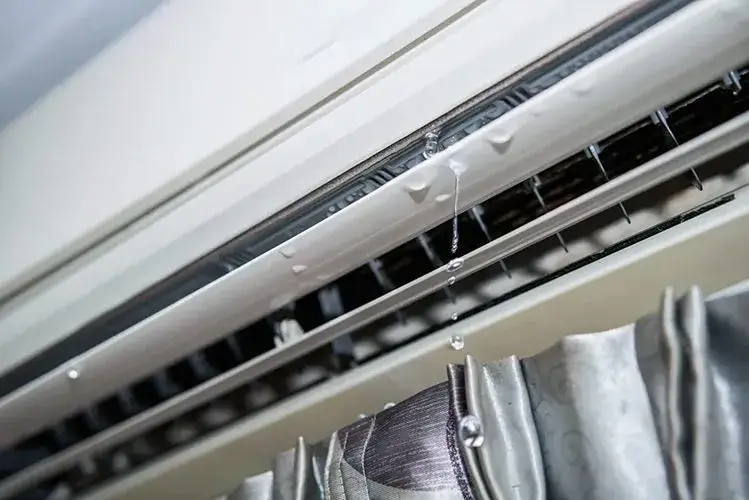
You walk into the room and feel it before you see it: a damp patch on the floor near the indoor unit, or a water stain creeping across the ceiling below the attic air handler. Your air conditioner is leaking water inside, and your first thought is how bad this is going to get. Here is what helps. On a hot, humid day, a central air conditioner can pull 5 to 20 gallons of water out of your home’s air, and all of it is supposed to drain safely away. When that water lands on your floor instead, the cause is almost always one of a handful of fixable problems.
In this guide, you’ll learn the five most common reasons an air conditioner leaks water inside, what each problem means, and when it is time to call an HVAC technician before the damage spreads.
Key Takeaways
- A clogged condensate drain line is the most common reason a home air conditioner leaks water inside.
- A dirty air filter or weak airflow can freeze the evaporator coil, which then drips as it thaws.
- A cracked drain pan and a broken condensate pump are other frequent causes of indoor leaks.
- Turn off your AC at the first sign of an indoor leak to prevent water damage.
- Most AC water leaks are affordable to fix when you catch them early.
Why Is Your Home Air Conditioner Leaking Water Inside?

Your air conditioner is leaking water inside because the moisture it normally drains away is escaping somewhere it should not. As your system cools your home, it pulls humidity from the air, and that water collects on the evaporator coil and drips into a pan that routes it outside. When something blocks or breaks that drainage path, the water has nowhere to go but into your home.
The most common culprit by far is a clogged condensate drain line. That said, several other issues create the same puddle, and telling them apart matters because the fix is different for each. The five reasons below cover almost every indoor AC leak we see, starting with the one you are most likely to have.
5 Reasons Why Your Home Air Conditioner Is Leaking Water Inside
Most indoor leaks trace back to one of these five problems. Some you can check yourself, while others need a technician, and we will flag which is which.
1. A Clogged Condensate Drain Line
The condensate drain line carries water from the drip pan to the outside of your home. Over time, algae, mold, dust, and sludge build up inside that line and clog it. When the water cannot get past the blockage, it backs up and overflows into your home. This is the single most common reason an air conditioner leaks water inside.
In humid Metro East summers, that gunk grows fast. Many newer systems have a float switch that shuts the unit off when the line clogs, but plenty of older systems just keep running and flooding. A wet vacuum on the outdoor end of the line can sometimes pull the clog free, though a stubborn blockage needs professional clearing.
2. A Dirty Air Filter
A clogged air filter is an easy thing to overlook, and it causes leaks indirectly. When the filter is packed with dust, it chokes off the airflow across the evaporator coil. With too little warm air moving over it, the coil gets too cold and freezes.
Then the problem shows up later. When that ice melts, it can overwhelm the drip pan and spill onto your floor. Checking and changing your filter every one to three months is the simplest way to prevent this chain of events.
3. A Frozen Evaporator Coil
A frozen evaporator coil is both a symptom and a cause. The coil freezes when airflow drops or refrigerant runs low, and a sheet of ice forms across it. As long as the ice is there, normal drainage stops.
Once the system cycles off and the coil thaws, all that melted ice pours down at once, far more than the pan was built to handle. If you open the unit and see ice on the coil or the refrigerant lines, turn the system off and let it thaw, then get the underlying airflow or refrigerant issue diagnosed before running it again.
4. A Cracked or Rusted Drain Pan
The drain pan sits beneath the evaporator coil to catch condensation. On older systems, usually those 12 to 15 years and up, that pan can rust through or crack. Once it does, water drips straight past it instead of draining away.
This one is hard to spot without opening the unit, since the pan is tucked inside the air handler. A technician can confirm a damaged pan and replace it, which is a far cheaper fix than the water damage a slow drip causes over a season.
5. A Broken Condensate Pump
If your air handler sits in a basement or another spot below the drain line, it relies on a condensate pump to push water up and out. When that pump fails, the water it was moving has nowhere to go and spills out around the unit.
You can sometimes hear a failing pump struggling or see water pooling right at its base. Because it is an electrical component handling water, a faulty condensate pump is best replaced by a professional rather than patched.
What to Do When You Find Water Leaking From Your AC

Act fast when you spot a leak, because standing water near electrical components and drywall does damage quickly. Your first move is to turn off the air conditioner at the thermostat, which stops more water from accumulating while you sort out the cause.
From there, take a few simple steps:
- Mop up the standing water and dry the area to protect your floors and walls.
- Check your air filter, and replace it if it looks dirty or clogged.
- Look for ice on the coil or refrigerant lines, which points to a freezing problem.
- If you can safely reach the outdoor end of the drain line, try clearing it with a wet vacuum.
If the leak stops after a filter change or a quick drain line clearing, you may have solved it. If the water keeps coming, or you find a cracked pan, a frozen coil, or a dead pump, the next step is a professional repair.
A Real Edwardsville AC Water Leak Story
Last July, a homeowner in Edwardsville called B & W Heating & Cooling after finding water pooling around their indoor unit and a damp spot spreading on the ceiling below it. They had already mopped it up twice that week.
Our technician found the classic culprit: a condensate drain line clogged solid with algae and sludge, which had backed water up into the pan until it overflowed.
While there, the technician also found a filter overdue for a change, which had been reducing airflow and adding to the trouble. We cleared and flushed the drain line, replaced the filter, confirmed the float switch worked, and checked the pan for damage. The leak stopped that afternoon.
It is a textbook example of how a simple clog turns into ceiling stains if it runs too long. A quick service call saved the homeowner from a much larger drywall and water damage repair down the line.
When to Call a Professional for AC Repair
Some causes on this list, like a dirty filter or a minor drain clog, are fair game for a handy homeowner. Others are not. A frozen coil tied to low refrigerant, a cracked drain pan, or a failed condensate pump all need tools, training, and the right parts to fix safely.
There is also the water damage clock to consider. Every hour an indoor leak runs, it threatens your floors, drywall, and the electrical parts inside your system.
B & W Heating & Cooling holds a 4.8 star rating across more than 400 Google reviews from homeowners throughout the Metro East, and our team provides fast, dependable professional AC repair for the Edwardsville area and beyond. When a leak will not stop or you cannot find the source, a technician can pinpoint it quickly and protect your home from the damage a steady drip causes.
Stopping AC Water Leaks Before They Damage Your Home
An air conditioner leaking water inside almost always comes back to drainage and airflow. A clogged condensate drain line tops the list, followed by a dirty filter, a frozen coil, a cracked drain pan, and a broken condensate pump. Catch any of them early, and you are usually looking at a small repair instead of a ruined ceiling.
The smartest habit is to change your filter on schedule and have your system checked before each cooling season, which heads off most of these problems before they start. If water is already on your floor and you cannot stop it, call B & W Heating & Cooling at (618) 254-0645 or reach out online. A quick visit now keeps a minor leak from turning into a major repair.
FAQ
Is it dangerous if my air conditioner is leaking water inside?
The water itself is not toxic, but an indoor AC leak can damage floors, walls, and ceilings, and create mold if left alone. Water near electrical components is also a hazard. Turn the system off and address the leak promptly to avoid bigger problems.
Can I still run my AC if it is leaking water inside?
It is best not to. Running the system while it leaks adds more water and risks damage to your home and the unit’s electrical parts. Turn the AC off, clear any obvious cause like a dirty filter, and call a professional if the leak continues.
Why does my AC only leak water on hot, humid days?
On humid days your air conditioner pulls far more moisture from the air, sometimes 5 to 20 gallons in a day. That heavier condensate load overwhelms any partial clog or minor drainage flaw that stays hidden when humidity is lower, so the leak appears in peak conditions.
How much does it cost to fix an AC that is leaking water?
Costs vary by cause. Clearing a clogged drain line or changing a filter is inexpensive, while replacing a drain pan, condensate pump, or addressing a refrigerant issue costs more. A technician can give you an exact quote after diagnosing the specific problem.
How do I stop my air conditioner from leaking water in the future?
Change your air filter every one to three months, schedule annual maintenance, and have the condensate drain line cleared during service. Keeping airflow strong and the drainage path clear prevents the clogs and frozen coils behind most indoor AC leaks.